Measuring the Masses Hidden in Motion
I came to astrophysics from mechanical engineering, and I still think of a galaxy the way an engineer thinks of a system: something whose hidden mass can be inferred from how its visible parts move. With the Galaxy Dynamics Lab and the USAC Astrophysics Research Group, I work on dynamical black hole mass measurements — using stellar kinematics from JWST, molecular-gas kinematics from ALMA, and mock observations for the upcoming Extremely Large Telescope.
Dynamical Black Hole Mass Modelling
A black hole reveals itself only through its gravity, so the mass we quote is always the output of a model: Jeans-anisotropic modelling (JAM) for stellar orbits, or forward-modelling of a rotating gas disc (KinMS) for molecular gas. My work sits in this modelling layer, connecting resolved kinematic data to a physically motivated mass estimate and its uncertainty.
Details
A fuller write-up of the modelling pipeline and literature context is in preparation and will be added here.
Molecular-Gas Kinematics with ALMA
Cold molecular gas settled into a circumnuclear disc is one of the cleanest dynamical tracers available: its rotation curve near the centre encodes the enclosed mass directly. I contributed to the ALMA 12CO(2–1) study that established a billion–solar–mass black hole in NGC 4061, part of the group's push toward the ultramassive end of the black hole mass function.
Details
A fuller write-up of this theme, including the underlying literature, is in preparation and will be added here.
Stellar Kinematics with JWST/NIRSpec
Where gas is absent or disturbed, stars themselves trace the gravitational potential. I worked on the JWST/NIRSpec stellar-dynamical measurement of the supermassive black hole in the nearby spiral galaxy M81 — extracting line-of-sight velocity distributions from integral-field spectroscopy and feeding them into a dynamical mass model.
Details
A fuller write-up of this theme, including the underlying literature, is in preparation and will be added here.
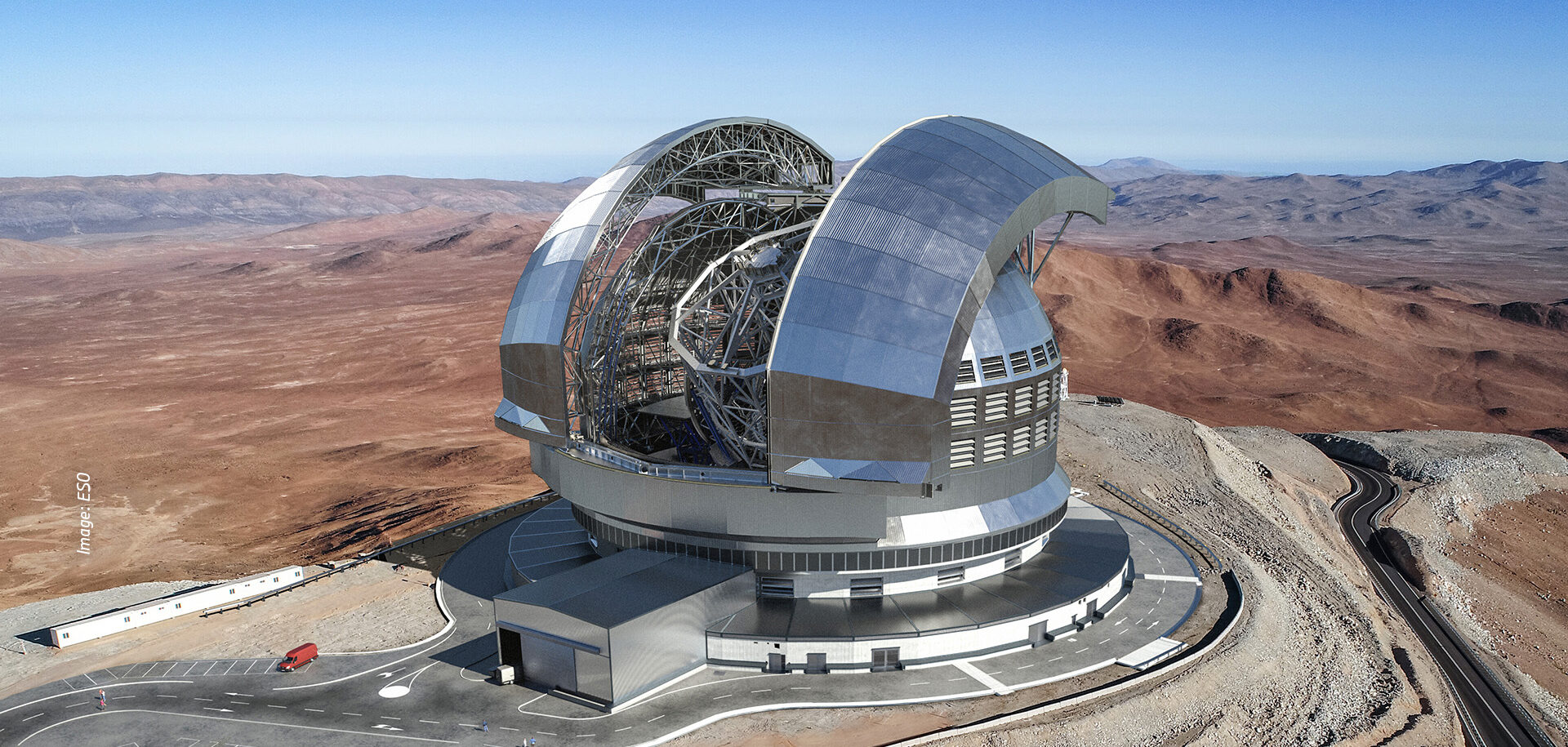
Mock Observations for the Extremely Large Telescope
The ELT and its instruments (HARMONI, MICADO) are not yet operational, so end-to-end simulated observations are how the field anticipates their reach. I contributed to simulations extending spatially resolved black hole mass measurements to 1 < z < 2, and to work probing how the inner surface-brightness profile of nuclear star clusters affects intermediate-mass black hole recovery.
Details
A fuller write-up of this theme, including the underlying literature, is in preparation and will be added here.